


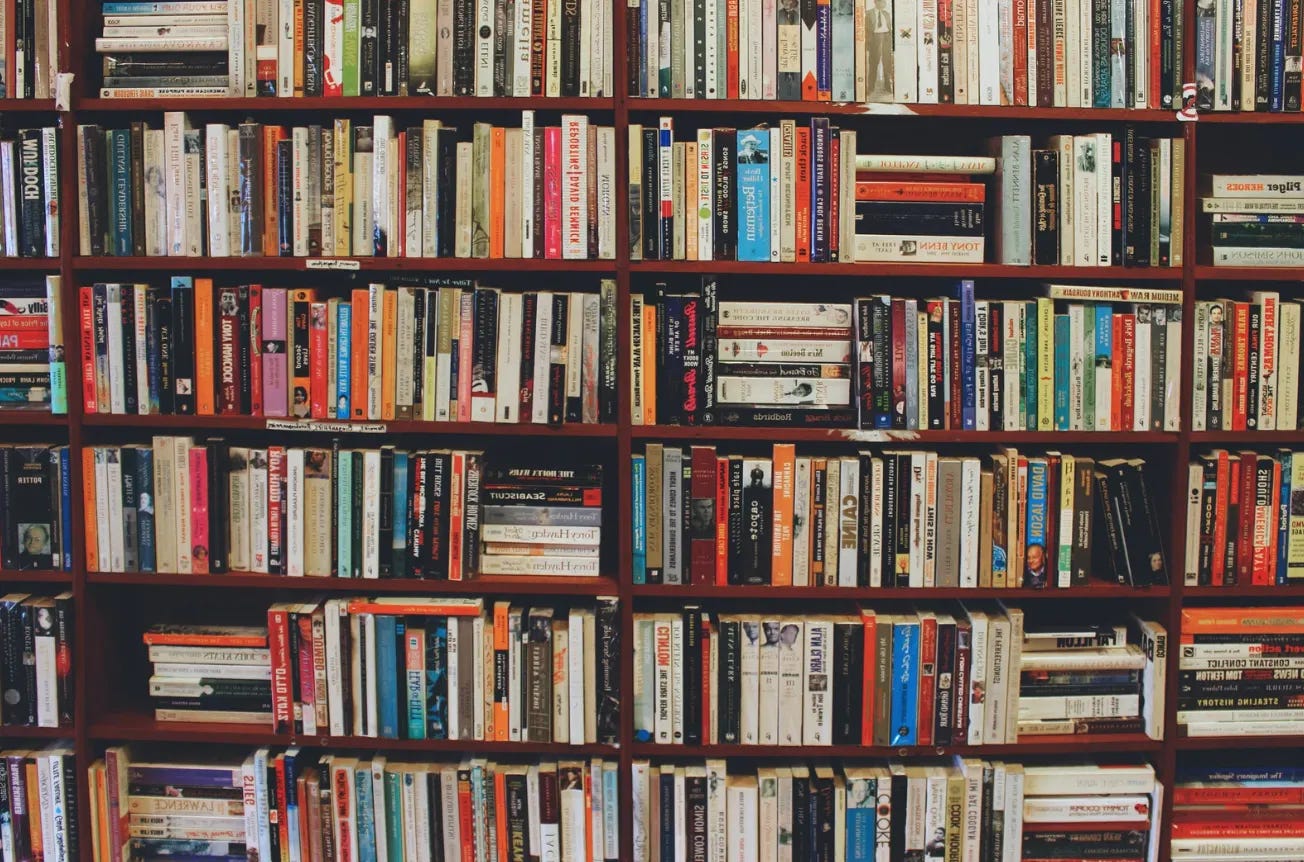
I’m writing this month’s entry from one of my favorite bookstores. (Check out Yu & Me Books in Chinatown, NYC!) They’re my favorite kind of place to write, bookstores. It’s as if the knowledge on the shelves seeps into me, giving me just enough words to break through the writer’s block and onto the page. (That and coffee. Caffeine helps too. Shoutout to combined bookstore-coffee-shops, for real.)
But as I sit surrounded by these tomes of experience, the crowning achievements of so many lives, I am dismayed by the way my generation reads (or doesn’t). Recent data tells a dim story, one of declining interest and broken attention spans. I am dismayed by the way I read, too, not to excuse myself from the problem. I read a book a month — two if I’m lucky. I read for school, and to keep up with the news, and to research the latest in impending doom. But I hardly read “for fun.” And beyond my love of fun, the problem here is that reading for fun is about so much more than entertainment. It’s about learning how to live.
I’ve written previously about the ways in which trans literature, specifically, has changed my life. Seeing girls like me represented on the page was a window into possibilities I had not yet realized could exist. I learned lessons about how to let myself be comfortable in the presence of friends, rather than maintaining a perfect, idealized gender presentation all the time. (Thanks to Girlfriends by Emily Zhou.) I learned, too, what I could write myself. I saw possibilities in poetry, and now I have a manuscript of my own. (Thanks to The Valleys Are So Lush and Steep by Trace Peterson.) I even found a new way into the world of sports that I used to so love, before transphobia and body shaming dimmed that light for me. (Thanks to Picnic Magazine and its feature on trans girl baseball!)
I’ve learned a lot from other kinds of writing, too. Audre Lorde’s Black feminist poetry and essays have shaped my thinking in profound ways. Her poem “A Litany for Survival” is my guiding force in this broken world. As a student at Mount Holyoke College, the Combahee River Collective Statement holds a permanent place in my heart and mind, as well. And in a queer and trans writing class last semester, Susan Sontag’s “How We Live Now” and other stories of life during the AIDS pandemic deepened my understanding of histories for which I lacked context.
Then add to all of these the more lighthearted kinds of “I love reading”-moments. Recently, a novel I was reading featured a character who had little regard for plans; she was carefree in a way I couldn’t quite imagine. In the moment, it sort of stressed me out to read her story. But in the days after, I found myself questioning my own tendency to adhere to a strict self-devised schedule, or skip a cup of coffee because I’d set an arbitrary limit for myself. I’d end up thinking back to the story, wondering what it must be like to approach things a different way. This is no comparison to the remarkable literature mentioned earlier, to be clear. But it’s just another manner in which reading can open up the world, in ways big and small.
So why aren’t we reading more? Why am I not devouring novels like I used to, as a kid? Why is my TBR growing faster than I can keep up! Of course, the answer is rooted in attention span. Until I can commit to a real Instagram detox, get comfortable with missing texts, and spend less time on YouTube, I won’t just lack the time to read — I’ll lack the ability to use the time I do have with any effect. When I set aside time to read, my brain wanders far more than I’d like. And I want to change that. Reading is worth too much not to.
So this Fall, I’m going to try different strategies to keep up with my reading goals, even as classwork piles up and distractions abound. I plan to start with a new daily page goal and increased usage of screen time-limiting apps. But if those don’t work, I won’t give up. I’ll find another way, because the worlds opened between pages are worth whatever it takes.
About the Author
Lily Elle Rood (she/her) is an emerging writer, activist, and scholar. As a public speaker and trans rights advocate, her voice has been heard from the steps of the Lincoln Memorial, outside the U.S. Supreme Court, and at the Human Rights Campaign Headquarters. Lately, you can find her writing essays, poetry, and fiction for her ongoing project, transp(r)ose.